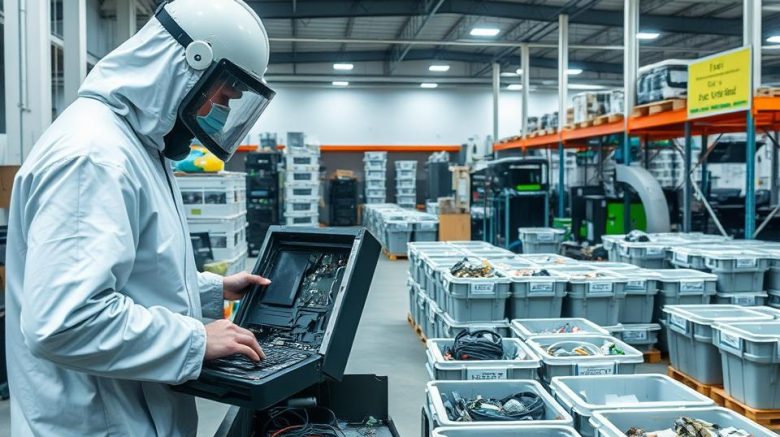
Singapore eWaste Disposal Services – Eco-Friendly
Does throwing an old laptop into the bin really impact Singapore environment more than you think?
In this guide, you’ll find environmentally responsible ewaste disposal services and practical electronic waste recycling options across Singapore. It explains how households and businesses can use public collection points, manufacturer take-back schemes, and certified providers such as Advance Recycling for NEA-compliant , trusted Advance Recycling – ewaste disposal disposal.
You’ll learn about national regulations, the Extended Producer Responsibility (EPR) context, and what to expect from sustainable e-waste solutions. We’ll also show how certified management, clear documentation, and secure data destruction safeguard the environment and your data.
Whether you need eco-friendly disposal options for a single phone or full IT asset disposition for a company, this guide outlines clear, compliant steps to recycle responsibly and recover high-value materials while cutting landfill use and pollution.
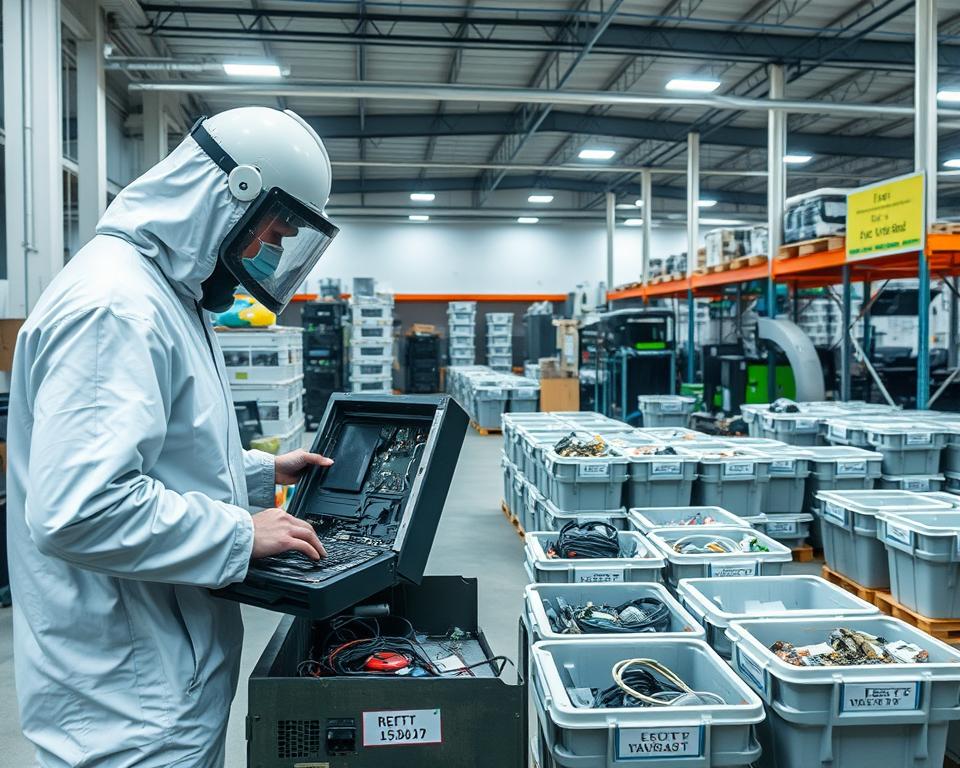
Key Takeaways
- NEA-aligned, certified recycling is the core focus in Singapore’s e-waste services.
- Advance Recycling stands out as an NEA-licensed provider offering secure, eco-friendly disposal.
- Households can use public drop-off points; businesses have specialised pickup and data destruction options.
- Sustainable electronic waste solutions recover metals and reduce landfill pollution.
- Understanding EPR and compliance helps choose the right ewaste disposal services.
Overview of eWaste Disposal Services in Singapore
Electronic waste covers a wide range of devices—from consumer gadgets to enterprise IT. It includes laptops, phones, tablets, monitors, and printers. It also covers servers, switches, networking gear, small household appliances, audio systems, power supplies, batteries, and lamps.
It’s essential for both households and businesses to understand what constitutes e-waste. Working devices may be donated or sold through approved centres. By contrast, broken or end-of-life items should go to approved facilities for safe, certified disposal.
National rules and the EPR scheme guide how e-waste is handled
The National Environment Agency (NEA) is responsible for overseeing ewaste disposal services. The agency sets standards for collectors and processors. EPR assigns obligations to producers. It mandates the use of authorised operators for managing take-back and recycling initiatives.
ALBA E-waste Smart Recycling and brand take-back programs operate under EPR. They provide regulated collection and processing services. Public drop-off points and online tools help residents locate local recycling options for electronic waste.
Certified recyclers connect regulation to day-to-day practice
NEA-licensed companies, such as Advance Recycling, offer secure and traceable handling of e-waste. They work with EPR operators and public programmes to ensure compliance with NEA standards for certified ewaste management.
Choosing a certified provider is beneficial for businesses seeking documented disposal and environmentally responsible recovery of metals and components. Robust e-waste services are vital for Singapore to reach circular economy goals. They also protect human health and the environment.
| Service Element | What to Expect | Why It Matters |
|---|---|---|
| Collection Options | Drop-offs, scheduled pickups, community drives | Convenience boosts recycling participation |
| Regulatory Oversight | NEA licensing, EPR-aligned authorised operators | Ensures legal compliance and traceable processing |
| Processing Standards | Secure facilities, sorting, material recovery, hazardous handling | Worker safety, pollution prevention, value recovery |
| Docs | Certificates of recycling, manifests, EPR reporting | Complete audit trail for stakeholders |
| Data Protection | Data wiping, degaussing, physical destruction on demand | Reduces data breach risk when disposing devices |
Benefits of Choosing Eco-Friendly Electronic Waste Recycling
Certified e-waste services deliver measurable environmental gains. It reduces landfill volume and keeps harmful substances like lead, mercury, and cadmium out of our soil and water. This action lowers pollution risks and minimizes fire hazards from damaged batteries.
Environmental benefits ewaste disposal services include less contamination and safer neighborhoods. Sustainable electronic waste solutions prevent toxins from entering our food chains. That protects public health and conserves local ecosystems in Singapore.
Professional recyclers prioritise material recovery. They extract valuable materials like copper, aluminum, gold, and rare earths through proven methods. These materials are then returned to manufacturing streams, reducing the demand for virgin mining and saving energy.
The table below outlines common recoveries and supply chain impacts.
| Material | Typical Source Device | Benefit |
|---|---|---|
| Copper | Power supplies, cables | Reduces need for new mining, lowers production emissions |
| Aluminium | Housings, heat sinks | Supports lightweight manufacturing, cuts energy use |
| Au | PCBs, connectors | High-value reuse in electronics, less environmental harm |
| REEs | Speakers, magnets, sensors | Stabilises critical supply; lowers import reliance |
Businesses gain reputational and regulatory advantages by adopting green technology recycling. Using certified providers helps meet NEA rules and the EPR framework. Firms show corporate responsibility through transparent recycling records and certificates.
Community programs and manufacturer take-back schemes boost public engagement. They broaden access to sustainable solutions and build customer trust. Local involvement strengthens brands and supports long-term environmental goals.
Selecting certified services ensures recovered resources are tracked and fed back into circular supply chains. That approach supports industry shifts to eco-friendly disposal and preserves value for future products.
How Professional eWaste Disposal Services Work
Pro collection services begin with clear hand-in options. Households can drop off items at e-waste bins, manned counters in stores, or depot drop-offs. Community drives and brand take-back events add convenient local choices.
Businesses follow tailored routes. Firms may schedule regular collections or book doorstep pickup for one-off clearouts. For major IT moves and office retirements, booked pickups maintain timelines and minimise disruption.
Secure data handling is a key step. Certified recyclers apply layered controls to protect sensitive data. Typical methods: wiping reusable drives, degaussing magnetic media, and shredding SSDs/HDDs when necessary.
Facilities back this up with physical security. Centres often use 24/7 CCTV, intrusion alarms, and access control to maintain chain-of-custody. Clients may request destruction certificates to satisfy audits and data-security standards.
Collected items travel via sealed transport to NEA-licensed plants. Teams sort items into streams—IT gear, batteries, lamps, and hazardous components. Correct separation cuts contamination and improves recovery.
Licensed processors adhere to regulated workflows. Hazardous parts are removed, reusable components harvested, and residuals routed to approved lines. Transparent handling plus certification gives corporate clients solid audit records.
Certified eWaste Management: What to Look For
When selecting a recycler in Singapore, it’s essential to verify their credentials, security measures, and the evidence they provide. Opt for companies that display their licenses, processes, and reports clearly. This reduces legal risk and supports corporate sustainability goals.
NEA Licensing & EPR Compliance
Ensure the chosen company holds an NEA license. It should handle regulated consumer products and ICT equipment under the Extended Producer Responsibility scheme. Licensing confirms adherence to national standards across collection, transport, and processing. Ask whether they work with authorised EPR operators as needed.
Third-party certifications and secure facilities
Look for independent certifications from reputable bodies and documented security protocols. Expect 24/7 CCTV, intrusion detection, and access-controlled zones. Secure destruction areas and monitored shredding lines safeguard data-bearing devices. Such measures are critical for certified electronic waste management and prevent diversion or data breaches.
Transparent reporting and certificates of destruction/recycling
Ask for detailed manifests, recycling logs, and destruction certificates per shipment. Clear chain-of-custody records and transparent ewaste reporting build trust among auditors and stakeholders. Certified providers issue reports confirming secure processing and responsible recovery.
Choose partners offering NEA-licensed recycling, verifiable credentials, and transparent reporting. That enhances compliance, protects sensitive information, and supports long-term goals.
Pricing: What’s Free vs. Charged
Both households and businesses should understand e-waste pricing. Public schemes and EPR operator programmes often cover small consumer items at no cost. Larger volumes and specialist items, on the other hand, may incur nominal charges from professional firms.
Free options for households
Many neighbourhood collection points, mall drop-offs, and town council drives offer free e-waste disposal for household-sized quantities. Brands like Samsung and Apple host take-back events for certain consumer devices under approved schemes. Eligibility varies by operator and item; check before you go.
When Charges Apply
Bulk clear-outs, corporate asset retirements, and large appliances typically fall under charged ewaste collection services. Licensed recyclers like Advance Recycling may quote fees for transport, manpower, and NEA-compliant processing. This includes servers, refrigeration units, and industrial gear.
Cost drivers to expect
Several factors can increase the cost of electronic waste recycling. Secure data destruction, such as wiping, degaussing, or physical shredding, raises fees. Doorstep pickup and scheduled collection add logistics charges. Handling hazardous items like lithium batteries and fluorescent lamps requires special procedures, further increasing costs.
| Service | Range (SGD) | Notes |
|---|---|---|
| Household drop-off for small devices | Free | Public collection points, manufacturer take-back for eligible items |
| Doorstep pickup (single items) | ~10–50 | Depends on distance and device type; includes basic transport |
| Corporate bulk collections | ~200–2,000+ | Quoted per job; charged services cover logistics and processing |
| Per-device data destruction | ~15–150 | Wiping/degaussing/shredding with certificate increases cost |
| Hazardous item handling | ~20–500 | Special treatment/permits for batteries, lamps, refrigerants |
| Certificate of destruction or recycling | Included–100 | Transparent providers state if certificate is included |
Getting a Clear Quote
Ask NEA-licensed recyclers for itemised quotes. Quotes should list all included services. Compare pricing and confirm if household items qualify for free e-waste disposal before scheduling collection.
Responsible Removal for Businesses & Households
Companies and residents must follow clear steps to keep electronics out of landfills and reduce hazards. Start with a plan that covers inventory, secure handling, and proper handover to licensed processors. This approach supports compliance and keeps data and people safe during transport and recycling.
Adopt a formal IT asset disposition program that logs equipment from decommissioning to final disposal. Include asset inventory records, chain-of-custody documentation, and certificates from NEA-licensed recyclers. Use certified destruction/refurbishment to meet audit and sustainability reporting.
Enforce data sanitisation via wiping, degaussing, or physical destruction. Work with providers who offer verifiable reports and secure transport to prevent loss or misuse of corporate information.
Household options: community collection points and manufacturer take-back
Residents have several household e-waste options. Drop off small electronics at community collection points, in-store counters, or public depots. Many brands run take-back schemes accepting end-of-life devices for recycling or refurbishment.
When possible, donate working devices to schools or charities. If beyond reuse, use authorised programs (e.g., ALBA) or industry take-backs to ensure proper processing.
Preparing devices: data backup, battery safety (tape ends), and removal of consumables
Back up important files and wipe data securely if required. Remove SIM/memory cards and factory-reset when possible. Label items if they contain sensitive components.
Treat batteries carefully. Tape terminals/exposed wires and isolate any leaking batteries in a leak-proof container. Remove consumables (e.g., ink cartridges) if requested by recyclers.
These steps ensure safer transport, reduce fire risk, and help processors comply during recycling or certified destruction.
What Items Are Accepted by Collection Services
Across Singapore, collection services accept a wide array of devices. Both consumer and enterprise items are covered. Drop-off points and scheduled pickups clearly list what’s accepted. That helps homes and IT teams plan removals efficiently.
Typical Consumer Devices
Most programs accept laptops, phones, tablets, desktops, monitors, and printers. Peripherals like scanners, keyboards, and mice are included. Before bringing older monitors, check for CRT restrictions at specific sites.
Specialised IT equipment
Corporate collections cover servers, storage units, switches, and routers. They typically require scheduled pickup and secure processing due to data risks and size. Providers of IT equipment recycling log asset details and can issue certificates upon completion.
Batteries, lamps and small household electronics
Batteries and lamps require special handling. Use dedicated or combined battery bins when available. Do not put batteries in general recycling carts. Tape the ends of rechargeable batteries and pack leaking cells in a leak-proof container before drop-off.
Small electronics like gaming consoles, audio systems, and power adapters are commonly accepted. Always confirm accepted items to avoid rejection.
Some sites only accept ICT equipment, batteries, and lamps, while others take all regulated consumer electronics. If you manage an office, inquire about fees for bulk or specialised disposals. Also, ask if IT equipment recycling includes data sanitisation.
Green Tech Recycling & Sustainable e-Waste Solutions
Singapore’s commitment to greener lifecycle models has boosted demand for green technology recycling and sustainable electronic waste solutions. Certified processors use tailored workflows to keep hazardous materials out of landfill. They also maximise reuse and recovery.
The journey begins with safe collection and separation. Teams sort by device type and isolate hazardous components (batteries, lamps) for dedicated treatment. After that, mechanical separation and controlled shredding free metals and plastics for refining.
Techniques for material recovery and safe processing
Shredding, eddy-current separation, and density sorting recover copper, aluminium, and mixed plastics. Metallurgical refining extracts gold, silver, and palladium for reuse. Hazardous streams are sent to licensed treatment plants, adhering to NEA and EPR standards.
Advance Recycling and other certified firms document each step meticulously. They issue manifests and recycling receipts that verify the chain of custody and support corporate reporting obligations.
Designing circular solutions: refurbishment, resale, and parts harvesting
Extending product lifecycles cuts demand for new materials. Functional laptops and phones are refurbished and resold or donated. Non-working units are harvested for usable parts (screens, RAM, power supplies).
Parts harvesting helps local repairers and eases raw-material pressure. It builds a resale market aligned with circular goals and lowers carbon footprints.
Partnerships with manufacturers and EPR operators to close the loop
Recyclers collaborate with manufacturers and EPR operators such as ALBA and KGS to run take-back schemes and dealer drop-off networks. Partnerships route recovered metals and refurbished units back into supply chains.
Material recovery ewaste disposal services often integrate with manufacturer repair programs. This ensures valuable fractions return to OEMs for remanufacture or component reuse, strengthening circularity.
| Stage | Objective | Outcome |
|---|---|---|
| Collection/Sorting | Separate streams by material and hazard | Safer handling and higher recovery |
| Mechanical Steps | Shredding, eddy currents, density sorting | Efficient extraction of metals and plastics |
| Metallurgical Refining | Recover base and precious metals | Feeds supply chains, reduces mining demand |
| Refurb/Repair | Test, repair, and certify working units | Extends life; supports resale markets |
| Parts Harvesting | Salvage usable parts | Lower repair costs, reduce waste |
| EPR Partnerships | Take-back networks and material return | Closes loop between consumers and manufacturers |
Choosing verified providers supports sustainable electronic waste solutions that align with Singapore’s EPR goals. Material recovery plus circular electronics reduce harm and create economic value.
Why Choose Advance Recycling for Professional e-Waste Disposal
Choosing the right partner for electronic waste collection is critical for both homes and businesses. A dependable provider reduces environmental impact, protects data, and streamlines logistics. Advance Recycling stands out as a dependable option that fulfills these requirements.
Advance Recycling follows NEA-aligned practices within the EPR framework. They accept ICT equipment, batteries, lamps, and consumer electronics. A focus on recovery and responsible processing reduces landfill and pollution.
Data security is a top priority for corporate clients. They provide wiping, degaussing, and shredding for storage devices. Their facilities employ CCTV and access control to safeguard data integrity and provide certificates of destruction or recycling upon request.
Convenience also matters. Clients may use drop-off points, schedule pickups, book doorstep collection, or join community drives. These choices make certified management accessible to all needs.
Transparent reporting is essential for businesses. Advance Recycling provides detailed manifests and certificates that document handling, transport, and final processing. This transparency builds trust in electronic waste collection services.
| Feature | Benefit for Households | Benefit for Businesses |
|---|---|---|
| Drop-off Points | Easy, local access for small items | Convenient for staff donations and local collections |
| Scheduled pickups | Doorstep removal for bulky items | Coordinated retirements with minimal downtime |
| Data Destruction | Peace of mind for personal data | Certified destruction and audit-ready documentation |
| NEA-Aligned Processing | Assured safe downstream handling | Regulatory/EPR compliance |
| Community Drives | Accessible collection events and local outreach | CSR opportunities and bulk collection options |
Advance Recycling combines responsibility, security, and convenience. Their approach supports certified ewaste management for both Singapore households and corporate clients seeking reliable electronic waste collection services.
Wrapping Up
NEA-licensed providers are key to responsible e-waste removal in Singapore. Certified management ensures safe handling of devices, batteries, and hazardous parts. This process is documented, with recycling or destruction options available. It protects the environment, reduces pollution, and enables resource recovery through sustainable electronic waste solutions.
Households can use public drop-off points and manufacturer take-back programmes for small items and batteries. Businesses should adopt formal ITAD practices. They should work with professional vendors for secure data wiping, degaussing, or physical destruction. This approach provides transparent certificates and reporting.
For reliable, eco-friendly outcomes, select a professional ewaste disposal services partner that aligns with NEA rules. Advance Recycling provides NEA-aligned processes, secure data handling, and convenient collections. They help close the loop on e-waste, supporting Singapore’s shift to sustainable electronic waste solutions.